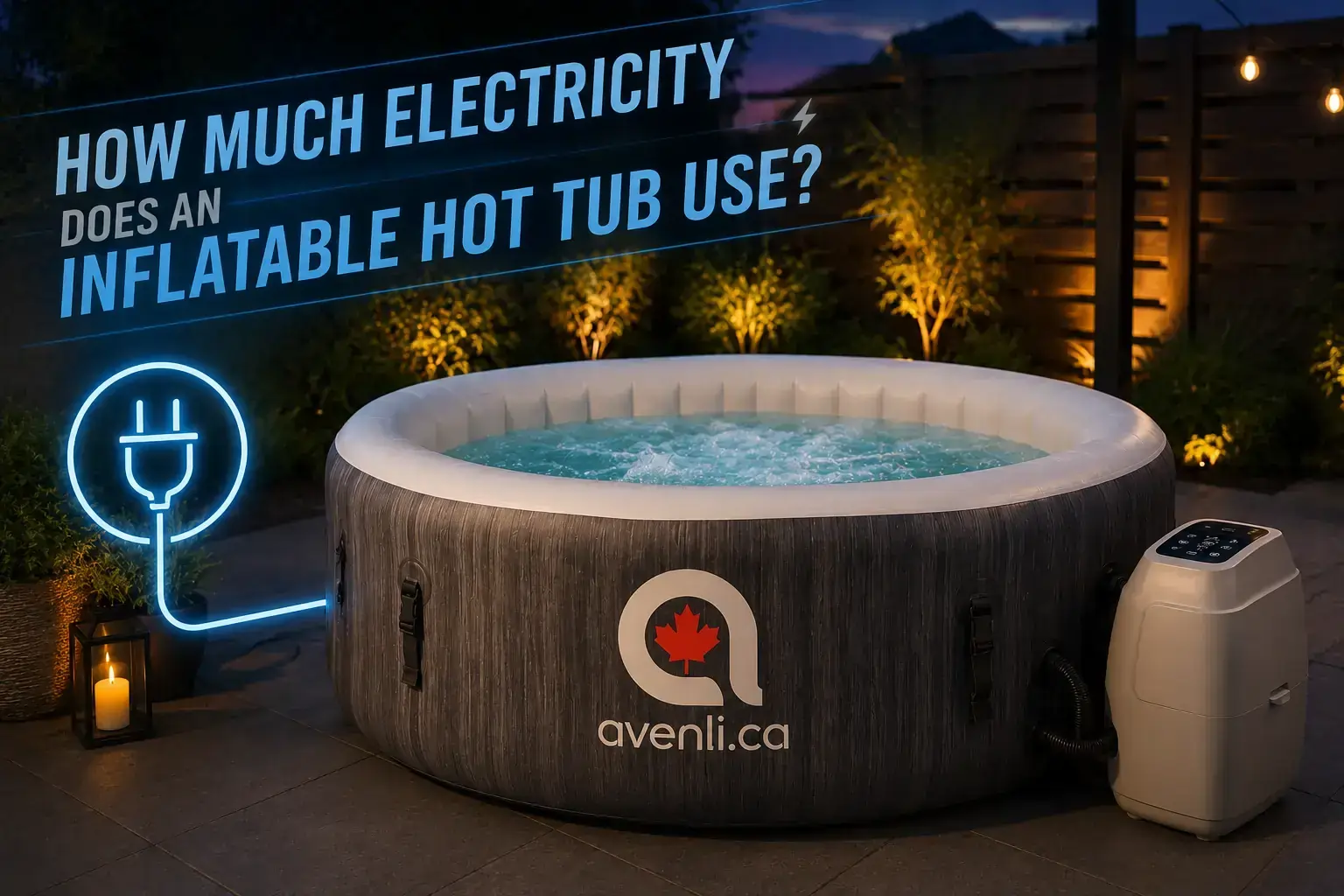
If you’re shopping for a hot tub, this is the question that matters once the excitement of picking colors and jet counts wears off. Here’s the short answer: most inflatable hot tubs run on about 1,500 watts and cost somewhere between $20 and $50 a month to operate. The exact number comes down to your climate, your settings, and how well the tub holds heat.
Let’s go through it properly, including a few things most guides skip.
Where the Electricity Actually Goes?
Two parts of the tub do almost all the work.
The heater is the big one, usually around 1,500 watts. It doesn’t run nonstop. It switches on to bring the water back up to your set temperature, then shuts off once it gets there similar to how a space heater cycles.
The pump handles filtration and, on most models, the jets. It draws less power, usually 150 to 300 watts, but it runs more often than the heater does.
There’s also a small trickle of standby power used whenever the tub is plugged in, even if it’s not actively heating. It’s tiny on its own, but leave it plugged in for a month and it shows up on the bill.
What It Actually Costs?
Here’s a realistic breakdown at an average rate of $0.15 per kWh:
| Timeframe | kWh Used | Estimated Cost |
|---|---|---|
| Per day | 4–8 kWh | $0.60–$1.20 |
| Per week | 28–56 kWh | $4.20–$8.40 |
| Per month | 120–240 kWh | $18–$36 |
| Per year | 1,400–2,900 kWh | $210–$435 |
This assumes the tub is holding a steady temperature rather than heating up from cold water each time. Reheating from scratch costs noticeably more, which is one reason owners are told to avoid draining their tub too often.
What Changes Your Bill?
A few factors explain why two people with the same tub end up with different bills.
Ambient temperature, matters more than almost anything else. A tub sitting in 70°F air barely has to work. That same tub in 30°F air runs nearly nonstop trying to keep up. Winter costs can easily run two to three times higher than summer costs.
Insulation quality, is the next biggest factor. Cheaper tubs lose heat quickly through thin walls and bare, uninsulated floors. A tub with proper foam insulation and a snug-fitting cover holds onto heat instead of forcing the heater to keep replacing it. If you’re still deciding which tub to buy, our guide to the best inflatable hot tubs in Canada walks through which brands actually deliver on insulation instead of just claiming it.
Thermostat settings, add up over time. Most people genuinely can’t feel the difference between 100°F and 104°F, but the heater notices every degree.
Energy-saving mode, found on most newer models, reduces how often the heater and pump cycle when the tub isn’t being used regularly. It’s a small feature that’s easy to overlook when comparing specs, but it’s worth checking for.
Is That a Lot of Electricity?
Not really, especially compared to the alternative.
| Hot Tub Type | Typical Wattage | Est. Annual Running Cost |
|---|---|---|
| Inflatable hot tub | 1,500 W | $210–$435 |
| Hard-shell hot tub | 4,000–6,000 W | $600–$1,200+ |
An inflatable hot tub draws about as much power as a hair dryer or space heater, and typically costs roughly half as much per year to run as a traditional hard-shell spa. That gap is one of the main reasons inflatable models have become popular with families who want the relaxation without committing to a permanent installation or a much bigger utility bill.
Ways to Lower the Cost
None of these require buying anything expensive:
- Use the cover every time. This one habit prevents more heat loss than anything else on this list.
- Add a foam floor pad underneath. Ground temperature pulls heat downward more than most people expect, especially on concrete or stone patios.
- Lower the thermostat a couple of degrees. You probably won’t notice the difference; your bill will.
- Turn on energy-saving mode during stretches when you’re not using the tub daily.
- Keep the filter clean. A clogged filter forces the pump to work harder for the same result, which quietly increases usage.
Together, these habits can realistically cut monthly running costs by 20 to 30 percent.
Setup and Placement Also Matter
Running cost isn’t only about the tub itself where you put it plays a role too. A hot tub tucked against a fence or wall, away from open wind, holds heat far better than one sitting exposed in the middle of a yard. Wind pulls heat off the water’s surface constantly, which means more heating cycles just to stay level.
Direct sunlight helps a little during the day, but it’s a minor factor compared to wind exposure and ground insulation. If you’re setting up your hot tub for the season, a sheltered spot near a wall or privacy screen is worth prioritizing over a perfectly sunny one.
A Quick Real-World Example
A family using their tub four nights a week, keeping it covered between uses and set to 100°F, typically lands around 150 kWh a month. At $0.15 per kWh, that’s about $22.50 a month, or roughly $270 a year. Compare that to a daily coffee habit or a streaming bundle, and it’s a fairly modest cost for something the whole family uses.
Choosing a More Efficient Tub
If you’re comparing models before buying, insulation quality and cover fit matter more than almost any number on a spec sheet. Avenli’s inflatable hot tubs are built with reinforced insulation and efficient heating systems designed to keep running costs predictable, even through colder months. If operating cost is part of your decision, it’s worth comparing that build quality directly rather than relying on wattage alone.
FAQs
Here are some frequently asked questions written below:
How much electricity does an inflatable hot tub use per day?
Typically 4 to 8 kWh, which costs around $0.60 to $1.20 depending on your local rate.
How much electricity does an inflatable hot tub use per month?
Most owners see $18 to $36 a month in mild weather, more in winter, less with good insulation habits.
Do inflatable hot tubs use a lot of electricity compared to regular hot tubs?
No. They typically cost 40 to 60 percent less to run per year than a hard-shell spa.
Does winter really increase electricity use that much?
Yes. Colder air forces the heater to run far more often, often doubling or tripling seasonal costs.
Does an insulated cover actually save money?
Yes. it’s the single most effective habit for reducing heat loss and keeping your bill down.
Conclusion
Most inflatable hot tubs cost less to run than people assume, usually landing between $20 and $50 a month with regular use. Good insulation, a properly fitted cover, and sensible thermostat settings will do more for your electricity bill than any single spec on a product page. If predictable running costs matter to you, take a look at Avenli’s energy-efficient inflatable hot tub lineup before you buy.