Summer hits fast in Canada, and nothing beats having your own backyard pool ready to go. If you’ve never done it before, the idea of setting up an inflatable pool might feel a bit overwhelming but honestly, it’s far simpler than most people expect.
Not sure which inflatable pool is right for your family before setting up? Read Best Inflatable Pools for Summer in Canada for a straight comparison of sizes, brands, and what actually lasts a full Canadian summer.
Whether you picked up a compact kids’ inflatable pool or a large inflatable pool for the whole family, the setup process follows the same core steps. This beginner guide walks you through how to set up an inflatable pool step by step, covering everything from finding the right spot in your yard to treating the water before your first swim. Follow along and you’ll be splashing around in no time.
Where to Set Up an Inflatable Pool for Kids and Families?
Before you even think about unpacking anything, the spot you choose makes a bigger difference than most people realize. A slightly uneven surface causes water to push harder on one side of the pool wall, which leads to blowouts and leaks. Look for a flat patch of grass in your backyard that gets decent sunlight throughout the day. Sunny spots naturally warm the water and slow down algae growth.
Keep these location rules in mind:
- Flat, level ground is non-negotiable a slope of even a few inches creates uneven water pressure
- Stay away from trees falling leaves and branches make pool cleaning a daily headache
- Avoid gravel or rough concrete without padding both surfaces wear through pool material quickly
- Leave at least two feet of space around the pool edges so kids can walk around safely
What Surface Works Best for Inflatable Pool Setup?
| Surface | Works? | Quick Note |
|---|---|---|
| Flat grass | ✅ Yes | Best option — lay a tarp underneath |
| Patio or concrete | ✅ Yes | Use foam padding to protect the base |
| Packed sand | ⚠️ Maybe | Needs to be compacted and perfectly level |
| Gravel | ❌ No | Puncture risk is too high |
| Any slope | ❌ No | Water pressure becomes dangerously uneven |
Always place a pool tarp or a piece of old carpet underneath your inflatable before filling. It takes five minutes and saves you from a lot of headaches later.
How to Set Up an Avenli Easy Set Inflatable Pool?
The Avenli easy set inflatable pool is built so that anyone can get it up and running without tools or a contractor. Here’s the full installation process from start to finish:
Step-by-step inflatable pool installation?
- Lay everything out on the ground pool shell, air pump, drain plug, any accessories
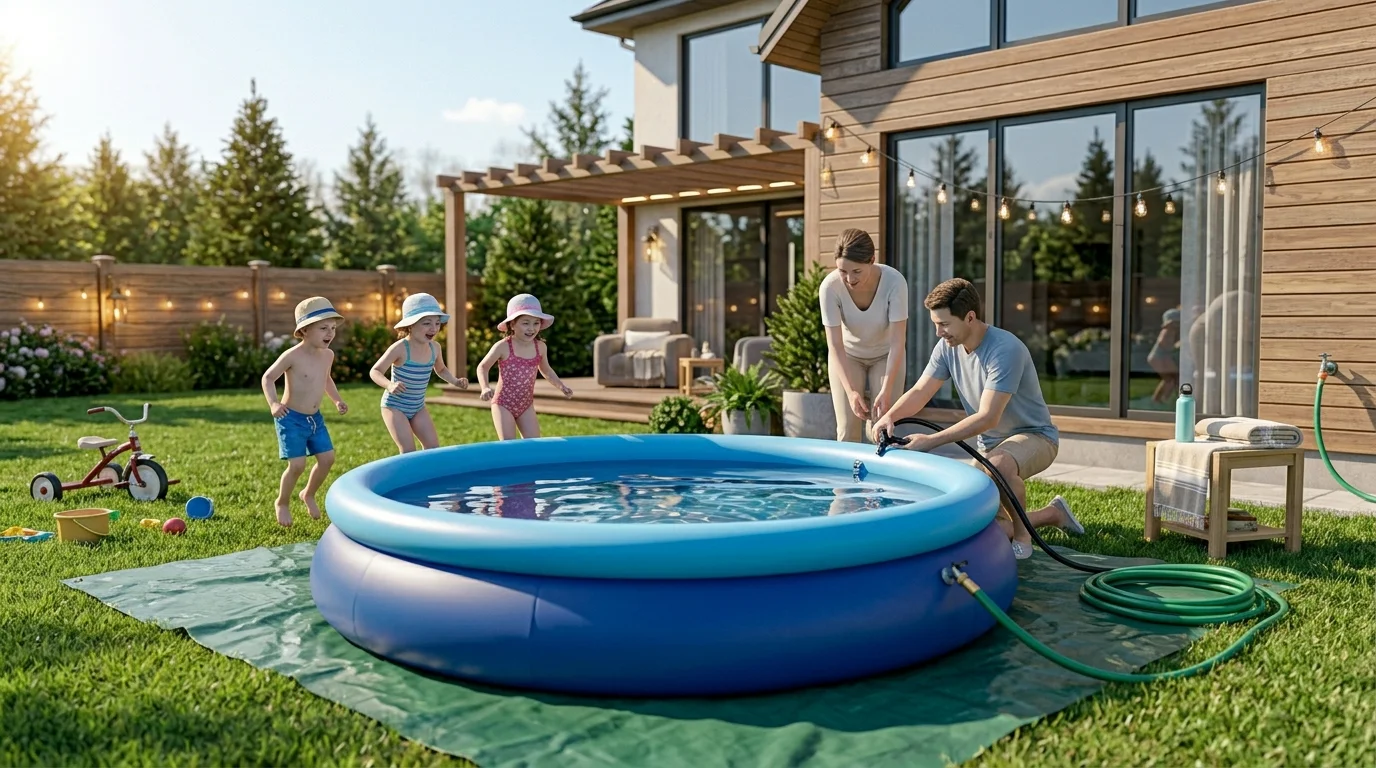
- Place your ground tarp down first, then unfold the pool on top of it
- Smooth out any folds or creases in the pool base before inflating anything
- Inflate the top ring using your air pump stop when it feels firm, not rock-hard
- Pour in a few inches of water first; this helps the pool find its shape and settle flat
- Continue filling with a garden hose up to about 80% of the maximum water line
- Add your chlorine or pool-safe sanitizer once the water reaches its final level
- Check the drain plug is sealed tight before anyone gets in
One thing first-timers often miss over-inflating the top ring puts serious stress on the seams. Follow the Avenli manufacturer instructions for the correct pressure, and you’ll avoid the most common cause of early leaks.
How Long Does Inflatable Pool Setup Take?
| Pool Size | Inflation | Water Fill | Total Time |
|---|---|---|---|
| Small (8–10 ft) | 5–10 min | 30–45 min | About 1 hour |
| Medium (12–14 ft) | 10–15 min | 60–90 min | About 2 hours |
| Large (16–18 ft) | 15–20 min | 2–3 hours | Up to 3.5 hours |
Start early on setup day. Waiting until noon to fill a large pool means you’re still running a hose at dinnertime.
Best Way to Set Up an Inflatable Pool in the Backyard
Getting the pool inflated is only half the job. The best way to set up an inflatable pool in the backyard also means getting ahead of maintenance before issues show up.
Once your pool is filled, keeping the water clean is the next challenge. Our How to Clean Inflatable Swimming Pool Water Easily guide walks through exactly what chemicals, habits, and filter routines keep water safe all season.
Before you fill, run through this quick checklist:
- Ground cleared of rocks, roots, and sharp debris
- Pool tarp in position
- Air pump charged and ready
- Garden hose reaches the spot
- Chlorine tablets or liquid on hand
- Skimmer net and pool brush nearby
Once the pool is filled, water chemistry is what keeps it safe to swim in. Test pH levels every two to three days the ideal range sits between 7.2 and 7.6. Add chlorine as needed and skim out leaves or debris daily. If you leave water sitting untreated for too long in summer heat, it turns green fast.
Beginner Guide to Inflatable Pool Setup: Tips That Actually Help?
If this is your first time setting up an inflatable pool, a few practical tips will save you real time and frustration:
- Grab a second person for the unfolding and positioning stage it’s awkward solo
- Use an electric air pump instead of blowing by hand especially for anything larger than 10 feet
- Check the ring for leaks right after inflation, before adding water run your hand slowly around the seams while listening closely
- Keep a patch kit nearby at all times minor punctures happen, and a quick repair beats draining hundreds of gallons of water
- Add a few inches of water before fully inflating if your ground is slightly uneven the weight helps the base flatten itself out
Mistakes That Are Easy to Avoid:
| Common Mistake | What to Do Instead |
|---|---|
| Over-inflating the ring | Stop when firm not stretched tight |
| Skipping water treatment | Test pH and add chlorine from day one |
| No ground protection | Always use a tarp or foam mat underneath |
| Leaving water uncovered overnight | Use a pool cover to block debris |
| Not draining before storage | Always drain, dry, and clean before packing away |
How to Install an Inflatable Family Pool Safely?
Large inflatable pools carry a lot of water, which means family pool safety is serious. Fill to no more than 80% of the maximum depth, always supervise children near the water, and place non-slip mats around the outside edges. Check pool wall pressure every day a soft or sagging wall is an early warning sign of an inflatable pool air leak that needs fixing immediately.
If you’re still weighing whether an inflatable pool is the right call versus a permanent setup, read Inflatable Pool vs Permanent Pool: Which Is Better? for an honest cost and maintenance comparison before you commit.
If you spot a leak:
- Apply soapy water to the suspected area and watch for bubbles
- Dry the spot completely, then press a patch from your inflatable pool patch kit over the hole
- Hold firm pressure for at least 60 seconds and leave it 24 hours before refilling
Inflatable Pool Cleaning and Seasonal Care
Weekly inflatable pool cleaning keeps the water safe and extends the life of your pool.
Simple weekly cleaning routine:
- Skim floating debris with a net
- Brush the pool walls to prevent algae buildup
- Vacuum the pool floor if debris has settled
- Test water chemistry and adjust chlorine and pH as needed
- Rinse the filter cartridge if your pool includes a filtration system
At the end of summer, drain the pool completely, rinse it with clean water, and let it dry in the sun before folding. Store it loosely in a cool, dry spot away from direct sunlight. This one habit alone adds years to your pool’s lifespan.
FAQs
Here are some frequently asked questions given below:
What surface is best for inflatable pool setup?
Flat grass covered with a ground tarp or foam mat is ideal it protects the pool base from punctures and keeps the water level evenly distributed.
How long does inflatable pool setup take?
A small pool is swim-ready in about an hour, while a large family pool can take up to three and a half hours once filling time is factored in.
How do I fix an air leak in my inflatable pool?
Dab soapy water around the pool surface to find the leak, dry the area fully, then press an inflatable pool patch kit repair patch firmly over the hole and wait 24 hours before refilling.
How often should I change the water in my inflatable pool?
Small pools without filtration need a full water change every one to two weeks, while larger filtered pools can go two to three weeks with proper chemical maintenance.
Do I need chemicals for an inflatable pool?
Yes even small pools need chlorine and regular pH checks between 7.2 and 7.6 to stay safe and clear for swimmers of all ages.
Conclusion
Setting up an inflatable pool is genuinely one of the easier summer projects once you know what you’re doing. Pick a flat, protected spot, follow the Avenli easy set pool instructions carefully, treat the water from the start, and stay on top of basic weekly maintenance. That’s really all it takes.
Here’s what to remember:
- Level ground and a ground tarp come first
- Inflate the ring firmly not to its limit
- Treat and test water every two to three days
- Drain, dry, and store properly at season’s end
Ready to find the right pool for your family? Browse Avenli’s full range of top-rated inflatable pools at avenli.ca and make this your best backyard summer yet.