
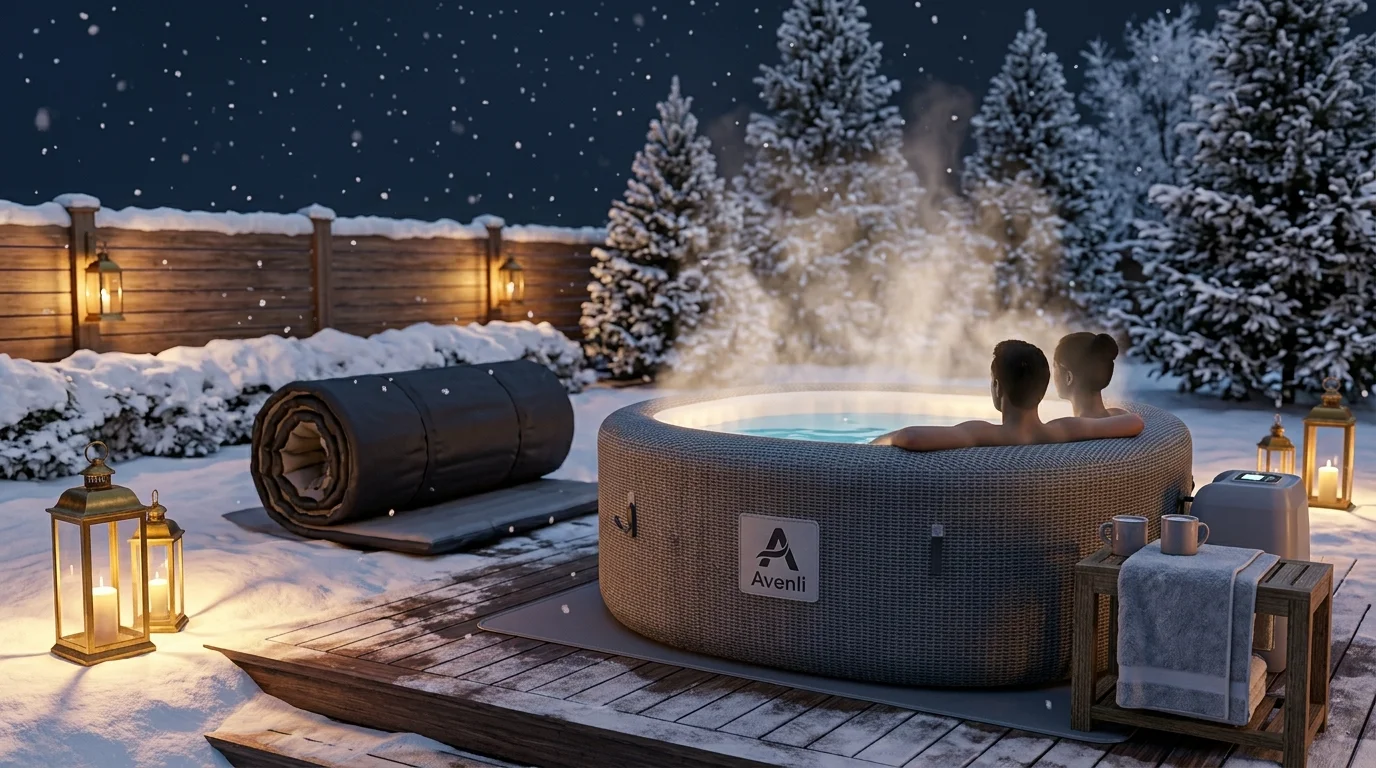
Canada in winter is brutal and that’s exactly why soaking in a hot tub when it’s minus ten outside feels so ridiculously good. The question most people have before they try it is whether an inflatable hot tub can actually handle Canadian winter conditions. It’s a fair thing to wonder. These aren’t hard-shell spas with built-in insulation and commercial-grade heating systems.
Getting the temperature right in winter is different from summer use. Our Best Temperature Setting for Inflatable Hot Tub guide covers the exact standby and soak temperatures that work best in cold Canadian conditions.
They’re portable, they’re made of PVC, and they weren’t originally designed with January in Winnipeg in mind. But here’s the honest answer yes, you can use an inflatable hot tub in winter in Canada, and plenty of people do. The key is knowing what the tub can and can’t handle, how to set it up properly for cold weather, and what habits will keep your heating costs from going through the roof. This guide covers all of it.
Can Inflatable Hot Tubs Actually Handle Canadian Winter?
The short answer is yes with realistic expectations. Most quality inflatable hot tubs, including Avenli’s range, are designed to heat water to around 40°C regardless of the air temperature outside. The heater works harder in colder weather, but it gets there. Where people run into problems isn’t the tub’s ability to heat the water it’s heat retention. An inflatable spa sitting in open winter air loses heat significantly faster than a hard-shell spa with foam insulation built into the walls.
What inflatable hot tubs handle well in winter?
- Maintaining water temperature when a good thermal cover is in place
- Operating in temperatures down to around -15°C with proper setup
- Handling light snow accumulation on the cover without damage
- Running the heater continuously to keep water at set temperature
What to be realistic about?
- Heating time from cold water is longer in winter factor in 12 to 24 hours for a full heat-up
- Energy costs run noticeably higher in cold months
- Leaving the tub uncovered even briefly drops the water temperature fast
- Extremely cold nights below -20°C push the heater to its limit and may require extra insulation measures
The tub’s biggest vulnerability in winter isn’t the heater it’s the water freezing if the unit is turned off and left without power in freezing temperatures. More on that shortly.
How to Set Up an Inflatable Hot Tub for Winter in Canada?
Where you place the tub matters enormously in winter. A setup that works fine in July becomes a cold-weather problem if it’s exposed to wind or sitting on frozen ground.
Best practices for winter hot tub placement:
- Choose a sheltered location — a deck with a fence or wall on at least two sides blocks wind significantly, which is one of the biggest causes of heat loss
- Keep it close to a power source — extension cords in winter are a risk; keep the run short and use a weatherproof outdoor outlet
- Put insulation underneath the tub — place foam mats or a thick insulating pad between the tub base and the ground or deck. Cold surfaces pull heat from the tub floor constantly
- Position away from roof edges — sliding snow from a roof can damage the tub or its cover
- Make sure drainage is accessible — if you ever need to drain in winter, frozen ground makes that much harder without planning ahead
Winter Setup Checklist:
| Setup Step | Why It Matters |
|---|---|
| Insulating foam pad underneath | Prevents heat loss through the base |
| Windbreak on exposed sides | Reduces surface heat loss dramatically |
| Thermal insulated cover | The single biggest factor in heat retention |
| Short power cable run | Safety and efficiency in cold temperatures |
| Cover clamps or straps | Stops cover lifting in winter wind |
| Clear access path to tub | Safety icy paths around hot tubs are a real hazard |
How to Insulate an Inflatable Hot Tub in Winter?
Insulation is where most of the difference between a manageable winter energy bill and a painful one gets made. The walls of an inflatable hot tub are basically PVC not insulated material. Every bit of extra insulation you can add around the tub makes the heater work less and your running costs go down.
Practical insulation tips that actually work:
- Thermal spa cover — non-negotiable — the cover is responsible for the majority of heat retention. A thick, well-fitting cover with a foil lining keeps water temperature stable for hours. Put it on every single time you get out, even for short breaks
- Insulating surround panels — some manufacturers sell foam or wooden surround kits that wrap around the outside of the tub. These make a meaningful difference in cold climates
- DIY foam board insulation — rigid foam insulation boards placed around the exterior sides of the tub work well and cost very little. Cover with a weatherproof wrap to protect from moisture
- Ground insulation mat — a thick foam camping mat or purpose-made spa floor insulator placed under the tub stops the cold ground pulling heat from the base
- Thermal blanket on the water surface — a floating thermal blanket sits on the water surface under the cover and adds another layer between the heated water and the cold air
The combination of a good cover plus side insulation plus base insulation can cut winter heating costs by 30 to 40 percent compared to running a bare tub with the standard lid.
Inflatable Hot Tub Winter Energy Costs in Canada — What to Expect?
Running an inflatable hot tub through a Canadian winter costs more than summer that’s just reality. But how much more depends entirely on how well insulated your setup is and how cold your region gets.
For a detailed breakdown of monthly running costs by province and season, read our complete Electricity Cost of Inflatable Hot Tub Per Month guide — it covers exactly what to expect on your winter electricity bill.
Estimated Monthly Energy Costs by Season:
| Season / Temperature | Estimated Monthly Cost | Notes |
|---|---|---|
| Summer (15°C – 25°C outside) | $25 – $50 | Heater runs minimally to maintain temp |
| Fall / Spring (5°C – 15°C) | $50 – $90 | Heater works harder, cover critical |
| Mild Winter (-5°C to 5°C) | $80 – $130 | Good insulation keeps costs manageable |
| Cold Winter (-15°C to -5°C) | $120 – $200+ | Insulation investment pays off here |
These are rough estimates based on average Canadian electricity rates and a standard 1,000 – 1,500W inflatable hot tub heater. Actual costs vary by province, tub model, and insulation setup.
Energy saving habits that add up:
- Keep the cover on at all times when not in use even 20 minutes uncovered in -10°C drops water temperature by several degrees
- Set the thermostat slightly lower if you’re not using the tub for a few days heating from 35°C to 40°C uses far less energy than reheating from cold
- Run the pump filtration cycle during the warmer part of the day rather than overnight
- Reduce jet usage slightly in very cold weather jets circulate cooler air through the water and drop temperature faster than most people expect
How to Protect an Inflatable Hot Tub from Snow Damage?
Snow itself isn’t necessarily the problem it’s the weight of heavy snowfall accumulating on the cover, or snow sliding off a roof onto the tub, that causes damage. Light snow sitting on a proper cover is fine. A foot of wet, heavy snow pressing on a cover that isn’t designed for that load is not.
Winter use also puts extra pressure on water chemistry — cold temperatures and longer heating cycles both affect chemical balance. See How to Maintain Hot Tub Water Chemistry Easily for a simple routine that keeps water clean through the cold season.
Snow and cold weather protection tips:
- After heavy snowfall, brush accumulated snow off the cover with a soft broom don’t let it build up
- Never use sharp tools to break ice that forms around the tub edges PVC cracks easily in cold temperatures when struck
- If the tub is positioned under a roof edge, install a snow guard or reposition the tub away from the drop zone
- Check the cover condition before winter a cover with cracked foam or torn seams loses heat retention fast and won’t handle snow weight properly
- Don’t sit or stand on the cover, even to clear snow inflatable hot tub covers aren’t load-bearing
Can You Leave an Inflatable Hot Tub Empty in Winter?
This is where a lot of people make an expensive mistake. Leaving an inflatable hot tub empty and unpowered in freezing temperatures is genuinely risky. Water remaining in the pump, heating system, or hose connections freezes, expands, and cracks components. Repair bills for a cracked pump or heating unit are often more than the tub itself cost.
Your options for winter downtime:
- Keep it running — if you’re using it regularly, just leave it powered and covered at a lower temperature setting (around 35°C). This uses less energy than fully reheating from cold
- Fully drain and store indoors — if you won’t use it for months, drain every drop of water, dry all components thoroughly, deflate, and store inside where temperatures stay above freezing
- Never leave partially drained — trapped water in the pump or pipes is the main cause of freeze damage. If you’re draining, drain completely
Winter Use vs. Storage — Quick Decision Guide:
| Your Situation | Best Approach |
|---|---|
| Using tub weekly through winter | Keep powered, well-insulated, covered |
| Using occasionally (once a month) | Keep on low heat setting, good cover |
| Not using for 2+ months | Fully drain, dry, deflate, store indoors |
| Going away for a week in winter | Do not turn off — set to lower temp and leave covered |
FAQs
Here are some frequently asked questions given below:
Yes most quality inflatable hot tubs including Avenli models heat water to 40°C regardless of outside temperature, though proper insulation, a thermal cover, and a sheltered location make a significant difference to performance and energy costs.
Can you use an inflatable hot tub in winter in Canada?
How much does it cost to run an inflatable hot tub in a Canadian winter?
Depending on your province’s electricity rate and how well insulated your setup is, expect $80 to $200 per month in colder winter months good insulation and cover use can keep costs toward the lower end of that range.
Should I leave my inflatable hot tub running all winter or drain it?
If you’re using it regularly, leave it running on a lower temperature setting between uses it costs less than reheating from cold. If you won’t use it for two months or more, drain completely and store indoors away from frost.
How do I stop my inflatable hot tub from losing heat in winter?
A good thermal insulated cover is the single biggest factor combine it with foam insulation panels on the sides, an insulating mat underneath, and a windbreak around the tub for the best heat retention in cold weather.
Can snow damage an inflatable hot tub?
Heavy snow accumulation on the cover can cause damage brush it off after significant snowfall with a soft broom. Never use sharp tools near the tub in winter as cold PVC cracks easily when struck.
Conclusion
Using an inflatable hot tub through a Canadian winter is genuinely one of the better experiences you can have in the cold months there’s something about sitting in 40°C water while snow falls around you that makes even January feel manageable. The tub can handle it. What makes the difference between a great winter experience and a frustrating one is how well you set it up.
Insulate properly, keep the cover on religiously, place the tub in a sheltered spot, and know what to do when you’re not using it for extended periods. Do those things and your Avenli inflatable hot tub will run reliably and comfortably right through the Canadian winter season. Ready to find the right hot tub for year-round use? Explore Avenli’s full range of portable hot tubs and winter accessories at avenli.ca today.Share