
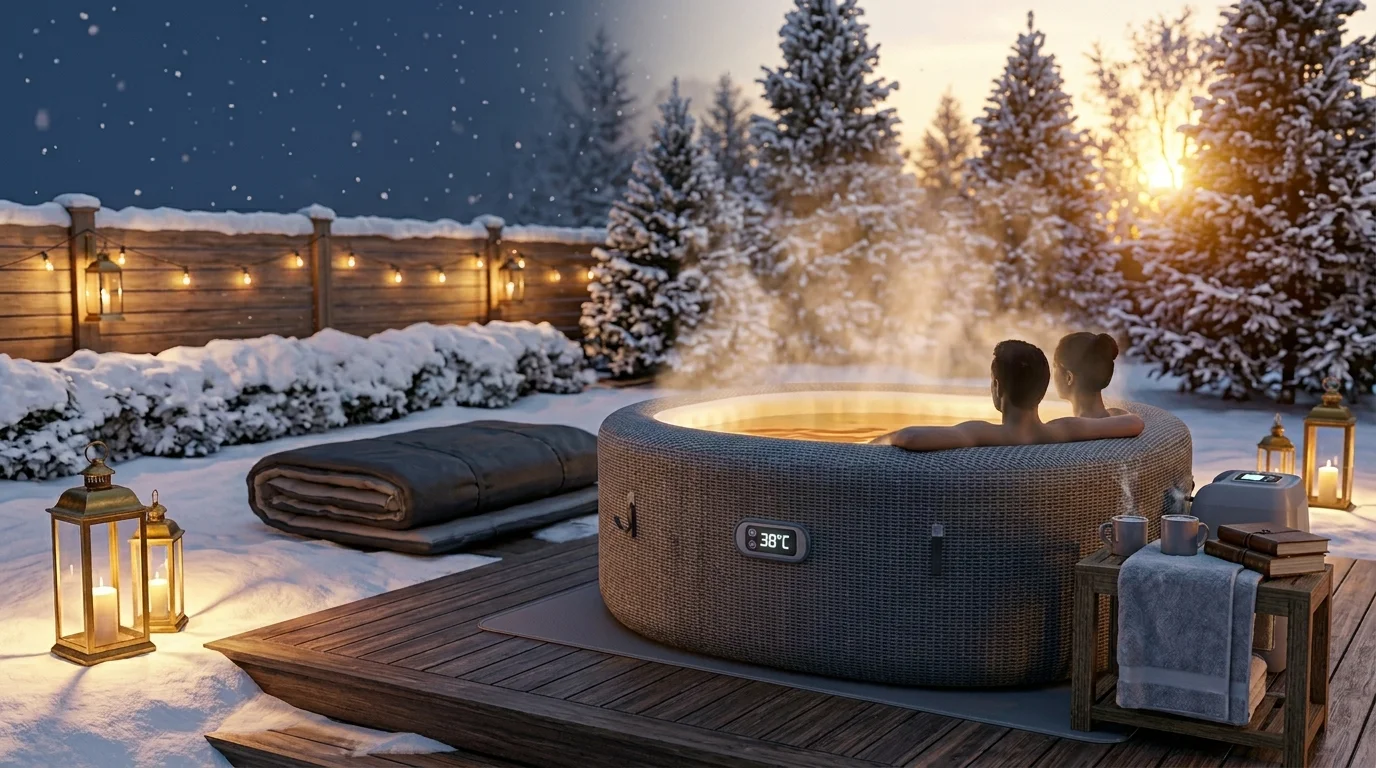
One of the first things new inflatable hot tub owners do is crank the temperature up as high as it will go, assuming hotter means better. It doesn’t and it’s actually one of the more common mistakes people make. Getting the temperature right matters more than most people realise. Too hot and you’re dealing with overheating risks, higher energy bills, and a soak that lasts ten minutes before you’re done.
Before diving into temperature settings, it’s worth knowing what running a hot tub actually costs month to month. Read our Electricity Cost of Inflatable Hot Tub Per Month guide to understand how temperature choices directly affect your bill.
Too cool and the whole experience feels like a slightly warm bath rather than a proper hot tub. The good news is finding your ideal inflatable hot tub temperature isn’t complicated once you understand what the numbers actually mean for comfort, safety, and running costs. This guide gives you a practical breakdown of the best temperature settings for different situations everyday use, kids, cold weather, energy saving, and everything in between.
What Is the Best Temperature for an Inflatable Hot Tub?
For most adults using a hot tub for relaxation, the sweet spot sits somewhere between 37°C and 40°C. That range feels genuinely warm without pushing into uncomfortable territory, and it’s where most people naturally settle after a bit of experimentation. The absolute maximum most inflatable hot tubs are designed to reach is 40°C, which is also the upper safety limit recommended for healthy adults according to spa safety guidelines.
Inflatable Hot Tub Temperature Guide at a Glance:
| Use Case | Recommended Temperature | Notes |
|---|---|---|
| General adult relaxation | 37°C – 40°C | The most common everyday range |
| First time users | 35°C – 37°C | Easier to adjust; work up gradually |
| Children (with supervision) | 30°C – 35°C | Lower temp, shorter soak times essential |
| Therapeutic / muscle relief | 38°C – 40°C | Higher end for sore muscles and joints |
| Summer use | 34°C – 37°C | Slightly cooler feels more refreshing |
| Winter use | 38°C – 40°C | Higher temp needed to offset cold air |
| Elderly users | 35°C – 38°C | Check with a doctor if any health concerns |
| Pregnant women | 35°C maximum | Medical advice strongly recommended first |
The 37°C to 38°C mark is genuinely the temperature most people find themselves coming back to warm enough to feel therapeutic, cool enough to stay in comfortably for 20 to 30 minutes.
Ideal Inflatable Hot Tub Temperature for Kids
This is an area where being careful matters. Children’s bodies heat up faster than adults and they’re less able to recognise when they’re getting too warm which means they’ll stay in longer than they should when the water is too hot. General spa safety guidance recommends keeping water temperature at or below 35°C when children are using the tub, and limiting soak time to 15 minutes maximum regardless of temperature.
Key rules for children using inflatable hot tubs:
- Keep water temperature at or below 35°C ideally closer to 30°C – 32°C for younger children
- Never leave children unsupervised in a hot tub, even for a moment
- Limit soak time to 10 – 15 minutes per session
- Watch for signs of overheating flushed skin, dizziness, unusual quietness, or complaints of feeling unwell
- Cool down time after a soak matters have kids sit out of the water for at least 10 minutes before getting back in
- Children under five years old should not use hot tubs at all
Adult-temperature hot tubs anything above 37°C are genuinely not appropriate for children. The risk isn’t theoretical. At 40°C, a small child can overheat in under five minutes.
What Temperature Should an Inflatable Hot Tub Be When Not in Use?
This question trips up a lot of new owners. The instinct is often to turn the heater off completely when the tub isn’t being used to save energy. In summer, that works reasonably well. In Canadian winter, it’s actually the wrong approach and can cause real damage.
If you’re keeping your tub running through colder months, standby temperature management becomes even more important. See our full guide on Can You Use Inflatable Hot Tub in Winter Canada? for a complete cold-weather setup breakdown.
Standby temperature recommendations by season:
- Summer standby: Drop to 30°C – 33°C when not in use for a day or two. Reheating from this point takes 2 – 4 hours depending on tub size
- Autumn / Spring standby: Keep at 35°C to avoid long reheat times and prevent any overnight chill from getting into the system
- Winter standby: Never drop below 15°C – 20°C in freezing conditions. Many people simply keep winter standby at 35°C – 37°C since the cost of reheating from cold water often exceeds the cost of maintaining a lower warm temperature
Energy Cost Comparison Heating From Cold vs. Maintaining Temperature:
| Scenario | Heating Time | Estimated Energy Used |
|---|---|---|
| Cold fill (10°C) → 38°C | 12 – 24 hours | High full heating cycle |
| Standby (30°C) → 38°C | 2 – 4 hours | Moderate |
| Standby (35°C) → 38°C | 45 min – 1.5 hours | Low |
| Maintaining at 38°C (good cover) | Ongoing small top-ups | Lowest per hour over time |
The maths usually works out in favour of keeping a standby temperature rather than full cold starts especially in winter when reheating takes longest and uses the most power.
How to Maintain Inflatable Hot Tub Temperature Efficiently
Getting to the right temperature is one thing keeping it there without running up a significant electricity bill is another. Heat retention is the main challenge with inflatable hot tubs because the walls are PVC rather than insulated foam, so heat escapes faster than in a hard-shell spa.
Practical tips for maintaining temperature efficiently:
- Cover discipline is everything — put the cover back on every time you get out, even for a short break. A quality insulated cover can retain water temperature for hours; an uncovered tub in cold weather loses degrees in minutes
- Use a floating thermal blanket — placing a thermal blanket on the water surface under the cover adds a meaningful extra layer of insulation between the heated water and cool air
- Insulate the sides and base — foam panels around the tub exterior and an insulating mat underneath reduce heat loss significantly, especially in winter
- Avoid running jets constantly — jets draw cooler air through the water and drop temperature faster than many people realise. Run jets when you want them, not as a default
- Position the tub out of the wind — wind is one of the biggest causes of rapid surface heat loss from the cover. A sheltered spot on a deck or against a fence makes a noticeable difference
- Check the cover condition regularly — a waterlogged or cracked cover loses its insulating ability. If the foam inside feels heavy or the cover sags, it needs replacing
Inflatable Hot Tub Not Heating Properly Common Causes
If your tub is struggling to reach or maintain its set temperature, the problem usually comes down to one of a few things. It’s worth working through these before assuming the heater is broken.
Heating problems are often connected to water chemistry issues rather than the heater itself. Read How to Maintain Hot Tub Water Chemistry Easily to rule out chemistry as the cause before troubleshooting the heating system.
Troubleshooting Temperature Problems:
| Problem | Likely Cause | Fix |
|---|---|---|
| Won’t reach set temperature | Ambient air too cold, cover missing | Add insulation, use cover during heating |
| Takes very long to heat | Cold fill water, small heater wattage | Fill with warmer water, check heater specs |
| Temperature drops quickly | Cover not sealing properly, no insulation | Check cover fit, add side insulation |
| Heater shuts off early | Safety cutoff triggered water overheated locally | Check sensor, avoid direct sunlight on tub |
| Temperature reading inaccurate | Thermometer sensor dirty or faulty | Clean sensor or replace thermometer |
| Uneven temperature in water | Pump not circulating enough | Run pump longer, check for blockages |
If the tub genuinely isn’t reaching temperature despite good insulation and a working cover, check whether the ambient temperature is within the manufacturer’s operating range. Most inflatable hot tubs are rated to operate down to around -10°C to -15°C below that, the heater simply can’t keep up regardless of insulation.
Energy Efficient Hot Tub Temperature Settings
Running an inflatable hot tub doesn’t have to be expensive, but temperature habits have a bigger impact on the electricity bill than most people expect.
Energy saving temperature habits:
- Set the thermostat to 37°C rather than 40°C for everyday use the difference in comfort is minimal but the energy saving over a month is real
- Lower standby temperature to 34°C – 35°C between uses instead of maintaining full soak temperature
- Avoid the temptation to bump temperature up and back down frequently each full reheat cycle from a lower temperature costs more than maintaining a consistent level
- In summer, let the water cool slightly overnight rather than maintaining peak heat morning reheat from 33°C to 38°C is quick and cheap
- Invest in a proper insulated cover if the tub didn’t come with one the energy saving pays back the cost of a good cover within a few months of winter use
FAQs
Here are some frequently asked questions given below:
What is the best temperature setting for an inflatable hot tub?
For most adults, 37°C to 40°C is the ideal range warm enough for genuine relaxation and muscle relief without pushing into uncomfortable territory, with 40°C being the recommended upper safety limit for healthy adults.
What temperature should a hot tub be for children?
Keep the water at or below 35°C for children, limit soak time to 10 – 15 minutes, and never leave them unsupervised children overheat much faster than adults and are less able to recognise the warning signs themselves.
Should I turn my inflatable hot tub off when not in use?
In summer, dropping to a 30°C standby is fine. In winter, never turn it off completely keeping it at 35°C standby is cheaper than reheating from cold and prevents any risk of freeze damage to the pump and heating components.
Why is my inflatable hot tub not reaching the set temperature?
The most common causes are a missing or poorly fitting cover, inadequate insulation in cold weather, or ambient temperatures below the heater’s rated operating range adding a thermal cover and side insulation fixes most temperature maintenance issues.
What is the most energy efficient temperature for an inflatable hot tub?
Setting the thermostat to 37°C rather than maximum 40°C and maintaining a 34°C – 35°C standby between uses rather than fully reheating from cold each time gives the best balance of comfort and energy efficiency.
Conclusion
Temperature is one of those things that seems simple until you think about it properly and getting it right genuinely changes how much you enjoy your inflatable hot tub. For most adults, somewhere in the 37°C to 40°C range hits the sweet spot. For kids, stay well below 35°C and keep soak times short. In winter, keep a standby temperature running rather than turning the heater off and dealing with long cold-start reheat times.
And whatever season you’re in, the cover going back on every time you get out is the single simplest habit that saves both heat and money. Small adjustments to how you manage temperature add up to a noticeably better experience and a lower electricity bill. Explore Avenli’s full range of inflatable hot tubs designed for year-round Canadian use at avenli.ca and find the right model for your backyard.Share