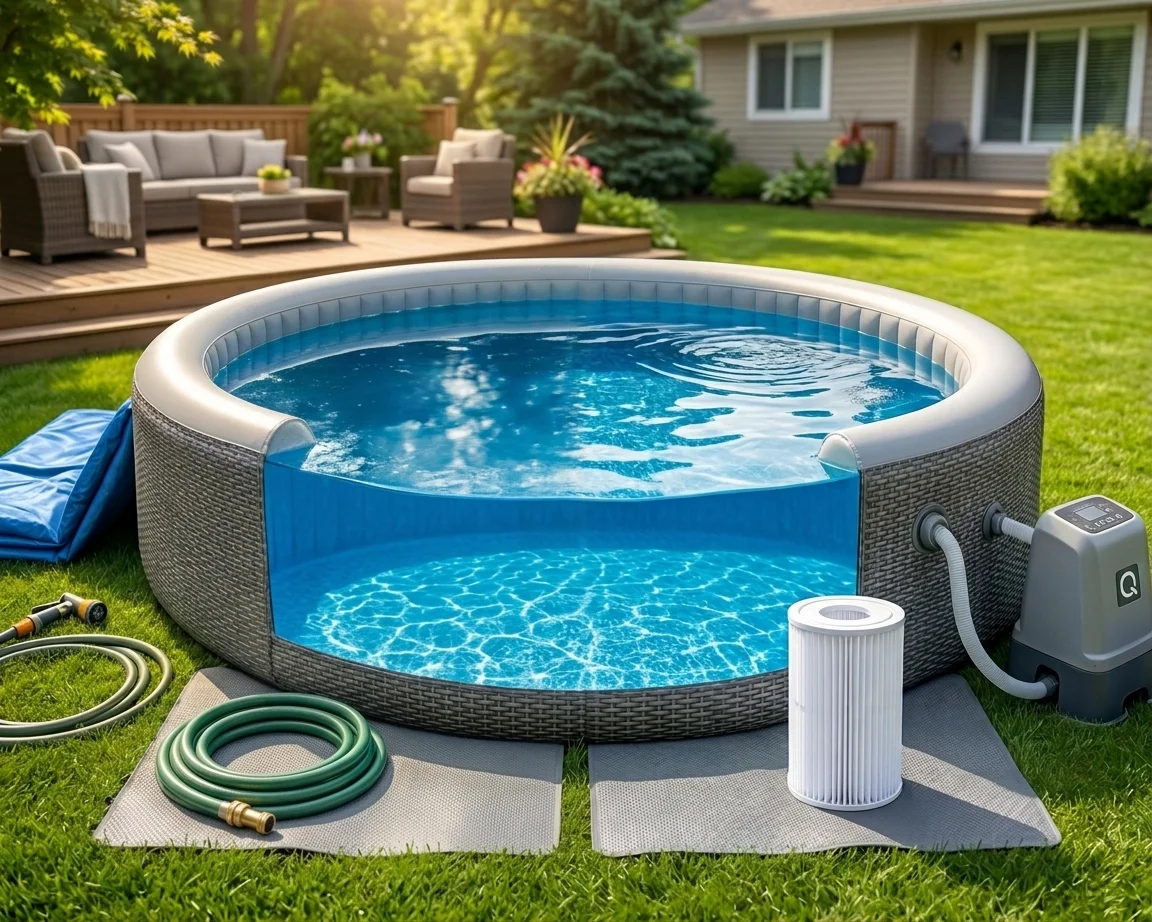
If your inflatable pool water keeps turning cloudy or green despite adding chemicals, the filter pump is almost always the real problem or the missing piece entirely. A lot of people set up an inflatable pool and skip the filter pump, assuming chemicals alone will do the job. They won’t.
Chemicals treat the water, but a filter pump physically removes debris, dead algae, sunscreen residue, and microscopic particles that make water look dull or unsafe. Whether you’re setting up a compact kids pool or a large Avenli family pool, choosing the right filter pump makes the difference between water that stays clear for weeks and water you’re draining every few days.
This guide covers what to look for, how filtration actually works, and how to keep your pump running properly all season.
Do You Actually Need a Filter Pump for an Inflatable Pool?
Short answer: yes, for any pool used regularly. The longer answer depends on pool size and how often it’s used.
| Pool Type | Filter Pump Needed? | Without a Pump |
|---|---|---|
| Small paddling pool (under 150cm) | Optional for occasional use | Drain and refill every 1–2 days |
| Kids pool (150–200cm) | Recommended for regular use | Water becomes unsafe within 3–5 days |
| Medium family pool (200–300cm) | Yes | Algae growth within days in warm weather |
| Large family pool (300cm+) | Essential | Water quality deteriorates in 24–48 hours |
| Inflatable hot tub / spa | Always required | Non-negotiable for hygiene and safety |
Without water circulation, pool water becomes stagnant. Stagnant warm water is where algae blooms start, bacteria multiply, and chemical treatments become far less effective because they can’t reach all areas of the pool evenly. Even a basic filter pump running a few hours per day changes water quality dramatically.
How Inflatable Pool Filter Pumps Work?
Understanding the basics helps you choose the right pump and troubleshoot problems when they come up.
The filtration cycle — how water stays clean?
Before connecting the filter pump, make sure the pool is correctly inflated and set up our guide on how to use an air pump for your inflatable pool covers the right technique so your fittings seat properly and no air pressure is lost during setup.
- Water is drawn from the pool through an inlet fitting
- It passes through a filter cartridge or filter sponge inside the pump housing
- The filter traps debris, particles, and contaminants as water flows through
- Filtered water returns to the pool through an outlet fitting
- The cycle repeats continuously, gradually clearing the water
Filter types used in inflatable pool pumps:
- Cartridge filter: The most common type for inflatable pools. A pleated paper or polyester filter cartridge catches fine particles. Cartridges need rinsing every 1–2 weeks and replacing every 2–4 weeks depending on use.
- Sponge/foam filter: Reusable foam filter that catches larger debris. More economical long-term washable and reusable many times before replacement. Compatible with several Intex and Avenli pump models.
- Sand filter: More common in larger above-ground pools. More effective but bulkier and more expensive than cartridge options for inflatable setups.
For most inflatable pool setups, a cartridge or sponge filter pump is the practical choice easy to maintain, compact, and designed specifically for portable pool use.
What Size Filter Pump Do You Need?
Pump sizing is measured in litres per hour (L/h) or gallons per hour (GPH) how much water the pump can circulate in an hour. The rule of thumb is that your pump should be able to circulate the full volume of your pool at least once every 4–6 hours.
Pump sizing guide by pool volume:
| Pool Size | Approx. Water Volume | Recommended Flow Rate |
|---|---|---|
| 150cm round | 700–1,000L | 500–1,000 L/h minimum |
| 200cm round | 1,500–2,500L | 1,000–2,000 L/h |
| 240cm round | 2,500–4,000L | 1,500–2,500 L/h |
| 300cm round | 4,000–6,000L | 2,500–3,500 L/h |
| 366cm+ round | 6,000–10,000L+ | 3,000–4,000 L/h+ |
Going slightly above the minimum flow rate is always better than going below. An undersized pump running continuously still won’t circulate water fast enough to keep it clear in warm weather which is exactly when algae grows fastest.
Filter Pump Maintenance: How to Keep It Running Properly?
A pump that isn’t maintained stops working efficiently within a few weeks. Most pump problems reduced flow, cloudy water returning, pump noise come down to a clogged or worn filter rather than a faulty pump.
Weekly filter maintenance routine:
- Remove the filter cartridge or sponge from the pump housing
- Rinse under a garden hose work from the inside out to push debris away from the filter surface
- Check for tears, collapse, or heavy discolouration that means it needs replacing
- Refit securely and check the pump housing lid is properly sealed before restarting
Filter replacement schedule:
- Cartridge filters: Rinse every 1–2 weeks, replace every 2–4 weeks during active use If you’re not sure exactly when your cartridge needs replacing versus just rinsing, our detailed guide on how often to change your pool filter cartridge breaks down the signs to watch for and the right schedule for your usage level.
- Foam/sponge filters: Rinse and wring out weekly, replace every 4–6 weeks or when foam loses firmness
- End of season: Always fit a fresh filter at the start of next season never restart with a stored used filter
Signs your filter needs replacing immediately:
- Visible tears or holes in the filter material
- Persistent cloudy water even after rinsing the filter
- Significantly reduced water flow from the outlet
- Strong musty or chemical smell from the pump outlet
- Filter sponge feels hard, brittle, or has permanently discoloured patches
Common Inflatable Pool Filter Pump Problems and Fixes
Most pump problems have straightforward solutions once you know what to look for.
Troubleshooting guide:
If your pool has already turned green, running the pump longer is only part of the fix. Our full guide on pool water turning green explains exactly why it happens and the step-by-step treatment process to clear it within 24 to 48 hours.
| Problem | Most Likely Cause | Fix |
|---|---|---|
| Water stays cloudy despite pump running | Clogged or worn filter | Rinse or replace filter cartridge |
| Pump running but weak water flow | Blocked inlet strainer or filter | Clean inlet strainer, replace filter |
| Pool water turning green | Pump not running enough hours per day | Run pump minimum 6–8 hours daily in summer |
| Pump making loud noise | Air trapped in system or debris in impeller | Turn off, check for debris, restart |
| Pump leaking at connections | Loose fittings or missing O-ring seal | Check and tighten all connections, inspect O-rings |
| Pool water smells despite chemicals | Insufficient circulation, filter overdue | Increase pump run time, replace filter |
One thing many pool owners don’t realise is that chemicals and filtration work together chemicals won’t keep water clear without circulation, and circulation alone won’t sanitise without proper chemical balance. Both are needed.
Tips for Getting the Most from Your Pool Filter Pump
Practical habits that make a real difference?
- Run the pump during the warmest part of the day algae grows fastest in peak heat, so that’s when filtration matters most
- Position the inlet and outlet fittings on opposite sides of the pool for maximum water circulation
- Use a pool cover when the pool isn’t in use reduces debris load on the filter significantly
- Backwash or rinse the filter after any heavy use session pool parties, kids, sunscreen all clog filters faster than normal
- Store the pump dry at the end of season moisture left inside the housing causes mould and corrosion
What shortens pump lifespan?
- Running the pump without water flowing through it (dry running)
- Operating with a completely blocked filter the motor overheats
- Leaving the pump in the pool water rather than mounted at the pool rim
- Storing with a wet, used filter still installed
FAQs
Here are some frequently asked questions given below:
Do I need a filter pump for a small inflatable pool?
For pools under 150cm used occasionally, draining and refilling every couple of days is manageable without a pump. For any pool used regularly or by multiple people, even a basic filter pump dramatically improves water safety and reduces how often you need to drain it.
How long should I run the filter pump each day?
During summer, run the pump a minimum of 6–8 hours per day for most family-sized pools. In very hot weather or after heavy use, running it continuously for 24 hours brings cloudy water back to clear faster than any other fix.
How often should the filter cartridge be replaced?
Rinse cartridge filters every one to two weeks and replace them every two to four weeks during active use. Foam sponge filters last longer rinse weekly and replace every four to six weeks or when they lose their firmness.
Why is my pool water still cloudy even with the pump running?
The most common cause is an overdue or clogged filter that’s no longer catching particles effectively. Rinse or replace the filter first. If water stays cloudy after a fresh filter, check chemical balance — pH outside the 7.2–7.6 range makes water appear cloudy regardless of filtration.
Can I use a filter pump designed for a larger pool on a smaller inflatable?
A pump with a higher flow rate than your pool needs is generally fine it just circulates water faster. The concern is the physical fitting size. Always check that the inlet and outlet connector sizes match your pool’s fittings before buying.
Conclusion
A filter pump is not an optional extra for an inflatable pool it’s the difference between water that stays safe and clear and water you’re constantly fighting. Choose a pump sized correctly for your pool volume, maintain the filter on a regular weekly schedule, and run it long enough each day to fully circulate the water.
Those three habits handle most of what goes wrong with inflatable pool water quality. Chemicals are still needed, but they work far better when the water is actually moving. Ready to find the right filter pump and pool accessories for this summer? Browse Avenli’s full range at avenli.ca and set your pool up properly from day one.Share