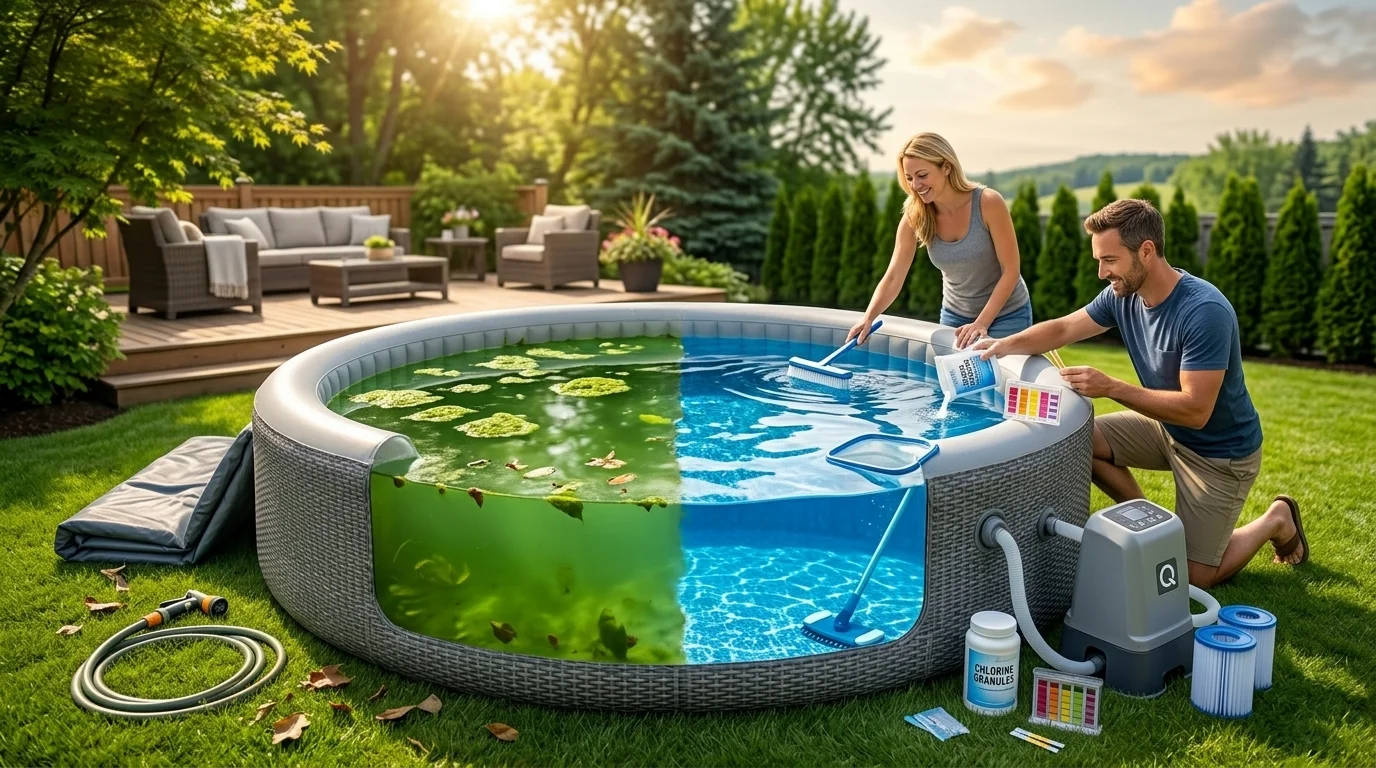
One day the water looks fine. The next morning you walk outside and the pool has turned an unmistakable shade of green. It happens faster than most people expect and it’s one of the most common problems inflatable pool owners deal with during the summer.
The good news is green pool water is fixable, usually within 24 to 48 hours, without draining and refilling. The less good news is that if you don’t understand what caused it, it will keep happening. Green pool water is almost always an algae problem, but algae doesn’t appear randomly it’s a symptom of something that went wrong with the water chemistry or circulation first.
In most cases, the circulation problem comes down to a filter pump not running long enough each day — or the wrong pump size for the pool volume. Getting the right filtration setup from the start prevents most green water problems before they happen.
This guide explains exactly why pool water turns green, how to clear it quickly, and what habits prevent it from coming back all summer.
Why Does Pool Water Turn Green?
The green colour in pool water almost always comes from algae. Algae spores are naturally present in the air and water and enter your pool constantly through rain, wind, people swimming, and water additions. Under normal conditions with adequate chlorine and balanced water chemistry, those spores are killed before they can establish themselves.
When conditions shift in algae’s favour, it reproduces rapidly sometimes turning water noticeably green within a single day.
The main reasons pool water turns green:
- Low chlorine levels — this is the number one cause. When free chlorine drops below 1 ppm, algae has nothing stopping its growth. A pool left for even two or three days in summer heat without adequate chlorine can turn green fast
- High pH — chlorine becomes significantly less effective as pH rises above 7.8. A pool with technically sufficient chlorine but a pH of 8.0 or above is effectively under-sanitised because the chlorine isn’t active enough to kill algae
- Poor circulation — algae grows fastest in still, warm water with no movement. A filter pump not running long enough each day or a pump that isn’t circulating the full water volume leaves dead zones where algae takes hold
- Heavy rain — rain dilutes pool chemicals, drops chlorine levels, and introduces phosphates and organic matter that feed algae growth. A green pool the day after heavy rain is extremely common
- High temperatures — warm water accelerates algae reproduction. A pool sitting in full sun all day at summer temperatures needs more chlorine than a shadier or cooler setup
- Phosphate buildup — phosphates from leaves, garden runoff, and some pool chemicals feed algae. High phosphate levels create conditions where algae bounces back quickly even after treatment
Green Pool Water Causes at a Glance:
| Cause | How It Triggers Algae | How Common |
|---|---|---|
| Low chlorine (under 1 ppm) | Direct nothing stopping algae growth | Very common |
| High pH (above 7.8) | Chlorine present but ineffective | Common |
| Filter not running enough | Dead zones, poor circulation | Common |
| Heavy rain | Dilutes chemicals, feeds algae | Very common |
| Hot weather | Accelerates reproduction | Seasonal |
| Phosphate buildup | Feeds algae growth | Moderate |
| Dirty or clogged filter | Recirculating rather than filtering | Common |
Is Green Pool Water Dangerous?
Short answer yes, and you shouldn’t swim in it. Green pool water means algae is present, and where algae grows, bacteria typically follows. Algae itself isn’t always directly harmful, but the bacterial contamination that accompanies it in a poorly sanitised pool is.
Swimming in green water risks skin rashes, ear infections, eye irritation, and gastrointestinal illness from swallowing the water. Keep people and pets out of the pool until it’s fully cleared and tested.
How to Fix Green Pool Water Fast — Step by Step?
Clearing a green pool involves a specific sequence. Doing the steps out of order wastes chemicals and time. Follow this process and most pools clear within 24 to 48 hours.
Test the water first
Before adding anything, test pH, chlorine, and alkalinity. This tells you what you’re actually dealing with and prevents you from adding chemicals on top of an imbalance that will fight against your efforts.
Adjust pH if it’s off
If pH is above 7.8, bring it down with a pH reducer before shocking. Chlorine shock added to high-pH water loses much of its effectiveness within hours. Get pH to 7.2 to 7.4 first this is the range where chlorine works most aggressively against algae.
Shock the pool
Add a double or triple dose of chlorine shock pool shock treatment at double the standard dose for light green, triple for dark green. Granular chlorine shock works faster than tablet forms for this purpose. Add the shock in the evening rather than during peak sun hours UV light breaks down chlorine quickly and evening addition gives it longer to work overnight.
Run the filter continuously
Set the pump to run continuously from this point not just 8 hours, but constant circulation until the water clears. The filter is doing the heavy lifting of removing dead algae from the water. A filter that’s only running part of the day significantly slows the clearing process.
Brush the pool walls and floor
Use a pool brush to scrub algae off the walls, floor, and any surfaces where it’s visibly growing. This breaks up algae colonies and gets them into the water where the shock treatment and filter can deal with them. Don’t skip this algae clinging to surfaces is protected from the shock treatment.
Add algaecide (optional but helpful)
A dose of algaecide after shocking kills remaining algae that the chlorine doesn’t fully reach and helps prevent regrowth. Add algaecide separately from shock not at the same time, as they react against each other.
Clean or replace the filter cartridge
After 12 to 24 hours of running, the filter will be loaded with dead algae. Clean the cartridge thoroughly or replace it a clogged filter at this stage recirculates the dead algae rather than removing it, which is why some pools stay murky after treatment. For inflatable pools, replacing the cartridge at this point rather than just rinsing it gives the best result.
Not sure whether to clean or replace at this point? Our guide on when to clean or replace the filter cartridge gives you a clear decision checklist so you don’t waste time cleaning a cartridge that’s already past its useful life.
Vacuum the pool floor
Once the water clears enough to see the floor, vacuum up settled dead algae. This removes it from the pool rather than leaving it to decompose and feed future algae growth.
Retest and rebalance
After the water clears, test all chemical levels and rebalance. Shock treatment consumes and affects multiple parameters. Return chlorine to a normal maintenance level (1 to 3 ppm) and confirm pH is back in range before anyone swims.
Green Pool Fix Timeline:
| Severity | Appearance | Expected Clear Time |
|---|---|---|
| Light green (early stage) | Slight tinge, water still mostly clear | 12 – 24 hours |
| Moderate green | Clearly green, some visibility | 24 – 48 hours |
| Dark green | Opaque, can’t see pool floor | 48 – 72 hours |
| Black green (severe algae) | Very dark, thick algae growth | 3 – 5 days or drain and refill |
Green Pool Water but Chlorine Is High What’s Happening?
This is a confusing situation you test the water, chlorine reads fine, but the water is still green. A few things can cause this.
Why a pool can be green with high chlorine?
- pH is too high — at pH 8.0 or above, chlorine is present in the water but mostly in an inactive form that doesn’t kill algae. The test registers it as chlorine but it’s not doing the work. Reduce pH first and the chlorine you already have will become effective
- Chlorine lock (chloramine buildup) — combined chlorine (chloramines) test as chlorine but don’t sanitise effectively. If total chlorine reads high but free chlorine is low, chloramines are the problem. A shock treatment with non-chlorine oxidiser breaks this down
- Dead algae still in the water — after shock treatment kills algae, the dead cells stay suspended in the water and keep it green or grey-green for up to 24 to 48 hours while the filter removes them. This looks like the treatment failed when it’s actually working
- Mustard algae — this less common algae strain is chlorine-resistant and requires specific algaecide treatment rather than just raising chlorine levels
Why Does Inflatable Pool Water Turn Green Overnight?
Inflatable pools are particularly vulnerable to overnight greening for a few reasons specific to how they’re set up and maintained.
Why inflatable pools turn green faster than permanent pools?
A lot of circulation issues in inflatable pools actually start at setup correctly setting up your inflatable pool and fitting the pump connections properly ensures water flows evenly from the first day rather than leaving dead zones where algae gets started.
- Smaller water volume — chemical levels in a small inflatable pool change much faster than in a large permanent pool. A few hot hours or a rain shower can swing chlorine from adequate to negligible
- Direct sun exposure — inflatable pools are typically in full sun, and UV breaks down chlorine significantly faster than in a shaded setup. A pool in direct sun all day in summer can burn through its chlorine by evening
- Filter pumps run shorter cycles — many inflatable pool owners run the pump for fewer hours than recommended. Inadequate circulation creates conditions for rapid algae growth in still, warm water
- No automatic chemical dosing — permanent pools often have automatic chlorine dispensers that maintain levels continuously. Inflatable pools depend on manual dosing, which means chlorine levels fluctuate more
The fix is the same as any green pool but the prevention for inflatable pools specifically involves more frequent chemical checks (every 1 to 2 days in hot weather), covering the pool when not in use to slow UV breakdown and debris entry, and running the filter pump for a full 8 hours minimum daily.
How to Prevent Pool Water from Turning Green?
Once you’ve fixed a green pool, keeping it that way is far less work than fixing it repeatedly.
Algae prevention habits that actually work:
- Test water every 2 days in summer heat — chlorine levels drop faster in warm weather and with frequent use. Catching a drop early is a 5-minute fix; missing it turns into a full treatment process
- Maintain free chlorine between 1 and 3 ppm — never let it drop below 1 ppm. For inflatable pools in direct sun, keeping it toward the higher end of that range provides more buffer
- Keep pH between 7.2 and 7.6 — this is where chlorine is most active. Outside this range, even adequate chlorine levels become insufficient
- Run the filter pump 8 hours minimum daily — circulation is the physical side of keeping water clean. No amount of chemicals fully compensates for poor circulation
- Shock weekly, not only when green — a regular weekly shock removes chloramines, kills developing algae before it becomes visible, and resets the water quality. Far easier than emergency treatment
- Cover the pool when not in use — a pool cover blocks UV light that degrades chlorine, keeps debris out, and slows the water warming that accelerates algae growth
- Skim daily — organic matter from leaves, insects, and pollen feeds algae. Remove it before it breaks down into the water
Weekly Pool Maintenance Schedule to Prevent Green Water:
| Task | Frequency | Why It Prevents Algae |
|---|---|---|
| Test pH and chlorine | Every 2 days | Catch drops before algae establishes |
| Add chlorine to maintain 1 – 3 ppm | As needed | Continuous algae kill |
| Run filter pump | 8 hours daily minimum | Circulation removes algae spores |
| Skim surface debris | Daily | Removes algae food source |
| Shock treatment | Weekly | Eliminates developing algae and chloramines |
| Clean filter cartridge | Weekly rinse | Ensures filter is actually filtering |
| Check alkalinity | Weekly | Stable alkalinity keeps pH stable |
FAQs
Here are some frequently asked questions given below:
Why did my pool water turn green overnight?
Chlorine levels dropped too low either from heavy use, hot sunny weather burning through chlorine fast, or rain diluting the water chemistry. Algae reproduces extremely quickly in warm water without adequate sanitiser, turning water visibly green within 12 to 24 hours of chlorine dropping below effective levels.
Can you fix green pool water without draining it?
Yes for light to moderately green pools, shock treatment, continuous filter running, brushing, and vacuuming clears the water within 24 to 48 hours without draining. Only severely algae-infested pools where treatment fails after multiple attempts typically require a full drain and refill.
Why is my pool still green after shocking?
Most likely the pH was too high for the shock to work effectively, the filter is clogged with dead algae and recirculating it, or the dead algae is still suspended in the water and needs more filter run time to clear. Clean or replace the filter cartridge and continue running the pump continuously.
How long does it take to clear a green pool?
A lightly green pool treated correctly clears within 12 to 24 hours. A moderately green pool typically takes 24 to 48 hours. Severely green pools may take 3 to 5 days of continuous treatment and filtration before the water returns to normal clarity.
How do you stop an inflatable pool from turning green?
Test chlorine and pH every two days, maintain free chlorine between 1 and 3 ppm, run the filter pump for 8 hours daily, shock the water weekly, cover the pool when not in use to reduce UV chlorine breakdown, and skim debris daily to remove the organic matter that feeds algae growth.
Conclusion
Green pool water is fixable and preventable but it requires understanding what’s actually causing it rather than just dumping in more chlorine and hoping for the best. Algae turns water green when chlorine drops, pH drifts too high, circulation is inadequate, or rain disrupts the chemical balance.
The fix follows a clear sequence test first, adjust pH, shock heavily, run the filter continuously, brush and vacuum, replace the cartridge, and rebalance. Prevention is simpler than treatment test every two days, maintain chlorine levels consistently, run the pump long enough daily, and shock weekly before problems develop rather than after.
A green pool is a warning that something in the maintenance routine slipped. Fix the routine and you won’t be dealing with it again. Browse Avenli’s full range of inflatable pools, filter pumps, and pool care accessories at avenli.ca and keep your water clear all summer long.